Dropshipping Success Strategies 2026 – Simple Guide for Beginner
top dropshipping success strategies for 2026
Angelina Markells
3/30/20263 min read
Top dropshipping success strategies for 2026..read it
Here are the top dropshipping success strategies for 2026. The landscape has shifted: old "import cheap AliExpress products and blast Meta ads" tactics often fail due to saturation, stricter ad platforms, and rising customer expectations for speed, trust, and quality. Winners treat it like a real business—focusing on reliability, branding, data-driven decisions, and customer experience while leveraging AI for efficiency.
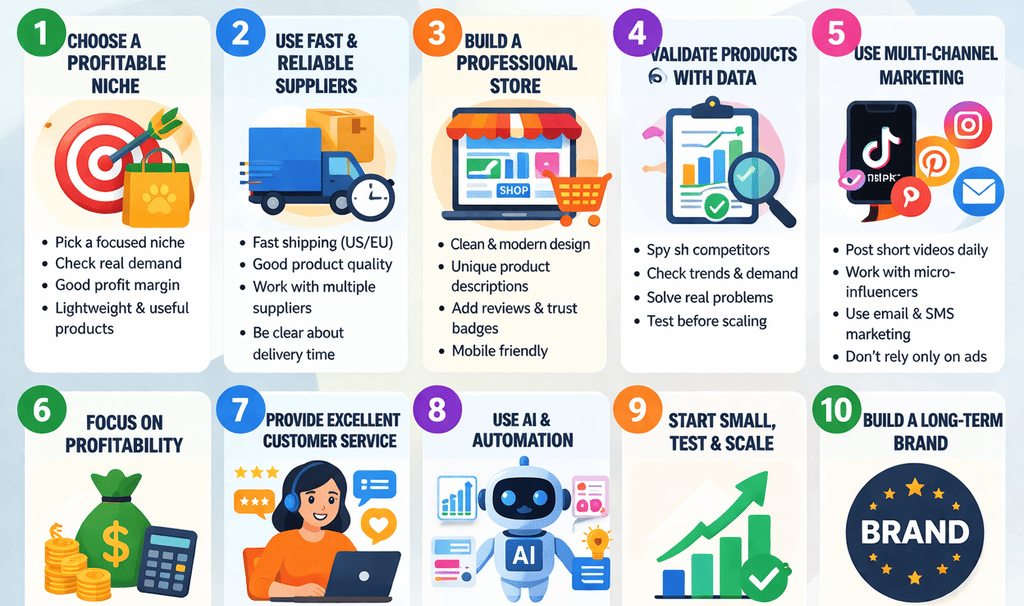
1. Choose a Profitable, Focused Niche with Real Demand
Don't sell everything. Pick a specific niche where you can understand the audience and provide value (e.g., pet supplies for a certain breed, eco-friendly home gadgets, or fitness accessories for beginners). Validate demand using search volume, social trends, and competitor analysis—not gut feeling. Aim for products with strong margins (ideally 40-60% after all costs), low shipping weight, and repeat purchase potential.
2. Prioritize Fast, Reliable Suppliers and Fulfillment
Slow shipping (2-4 weeks) kills conversions in 2026. Vet multiple suppliers for quality, stock reliability, and faster options (US/EU-based or hybrid models where possible). Build relationships instead of relying on one. Consider tools for automation and test fulfillment early. Transparent shipping times and excellent post-sale support build trust and reduce refunds/chargebacks.
3. Build a Professional, Branded Store That Converts
Use Shopify (or similar) with a clean, modern theme. Invest in high-quality images, unique product descriptions (not copied), trust signals (reviews, secure badges, clear policies), and branding that stands out. A generic store looks scammy—focus on user experience, mobile optimization, and perceived value. AI tools can speed up setup, but customize for authenticity.
4. Validate Products with Data, Not Trends Alone
Use a systematic approach: spy on competitors, check ad libraries, analyze social engagement, and confirm demand (searches, sales signals). Look for products solving real pain points with "wow" factor or shareability. Test small batches before scaling. Winning products often have broad appeal but allow niche positioning.
5. Master Multi-Channel Marketing (Don't Rely on Paid Ads Alone)
Organic Short-Form Video: Post 1-3 times daily on TikTok/Reels/Instagram—raw, hook-heavy content drives free viral traffic.
Micro-Influencer Seeding: Send free products to smaller creators (10k-50k followers) for authentic UGC and social proof.
SMS & Email Marketing: Recover abandoned carts and nurture repeat buyers.
Diversify: Pinterest, SEO, Google, and organic social. Start small with testing budgets; scale only what works. Many successes combine organic reach with targeted paid ads.
6. Focus on Profitability and Business Math from Day One
Calculate true margins including ads, fees, returns, and shipping. Avoid price wars. Bundle products to increase average order value (AOV). Track everything—many "big revenue" stores lose money. Test offers thoroughly before heavy spending.
7. Provide Exceptional Customer Experience and Own the Process
Set realistic expectations, communicate proactively, and handle issues (even supplier mistakes) gracefully. Fast responses, easy returns, and personalization turn one-time buyers into loyal ones. This reduces negative reviews and builds word-of-mouth.
8. Leverage AI and Automation Wisely
Use AI for store building, product research, ad copy, content creation, and operations to save time. But combine it with human oversight—don't let it replace strategy or testing. Tools can help beginners launch faster, but execution still matters.
9. Start Small, Test, Iterate, and Scale Smart
Many successes began with low budgets or even $0 ad spend by focusing on organic first. Fail fast on bad products/offers. Document what works. Consistency and learning from data beat perfectionism. Treat failures as lessons—persistence is key.
10. Think Long-Term Branding Over Quick Flips
Shift from pure arbitrage to building a brand. This supports higher prices, customer loyalty, and multiple revenue streams. Successful stores often expand into related products or their own lines over time.
Real-World Inspiration: Many top earners started small, focused on one niche, bundled products, invested in marketing tests, and prioritized trust/shipping. Examples include stores hitting six or seven figures by niching down, using UGC, and optimizing fulfillment.
Quick Action Plan:
Research and pick 1 niche + 5-10 validated products.
Set up a branded store.
Secure reliable suppliers.
Launch with organic content + small tests.
Track metrics and optimize relentlessly.
Dropshipping remains viable in 2026 for those who execute well, but it rewards patience, testing, and customer focus over hype. Start lean, learn continuously, and treat it as a business—not a lottery.